Did you know 01 / 06
Bananas are berries. Strawberries are not.
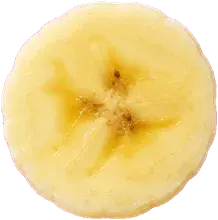
To a botanist a berry grows from one flower with one ovary and keeps its seeds inside. Bananas pass. Strawberries wear their seeds on the outside, so they do not.
It is the world's largest herb. The trunk is made of tightly rolled leaf stalks, and after one harvest the whole stem dies back and a new shoot takes over.
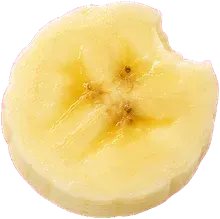
Almost every banana in a supermarket is a Cavendish, grown from cuttings of the same plant. Wild bananas are full of hard seeds; this one has only tiny black specks.
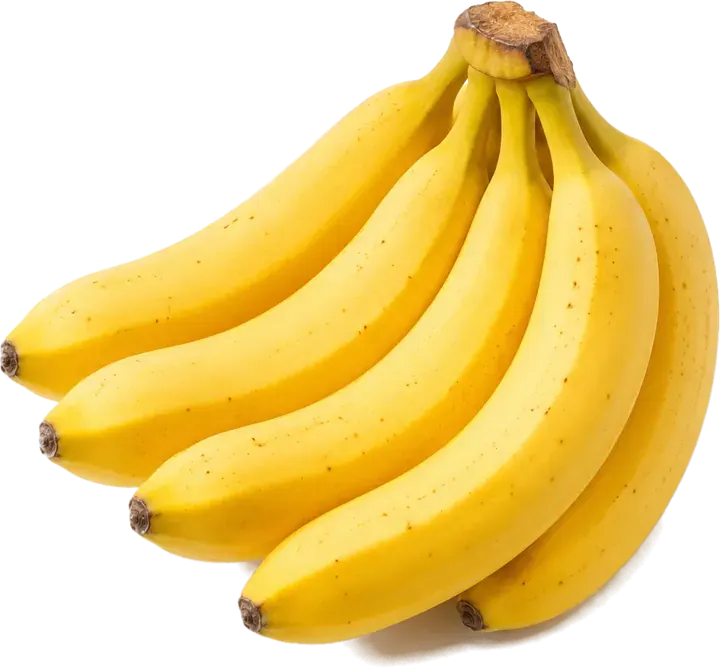
They start pointing down, then turn towards the light as they grow. That is where the curve comes from, and why a bunch looks like an open hand.
Bananas are rich in potassium, and a tiny part of all potassium is radioactive. Scientists even joke about the banana equivalent dose: harmless, but real.
As a banana ripens, its starch turns into sugar and the skin freckles. Those spotty ones on the counter are not past it, they are ready for baking.
The ripeness scale
How spotty is yours?
Pick the banana that looks like the one on your counter. Every stage is good for something; only the time to cook changes.
Stage 1 of 7
Green
Hard and starchy, it tastes a bit like raw potato. Leave it on the counter for three or four days, or slice it thin and fry it as savoury chips.
Cook now
Nothing yet. Give it a few days.
Stage 2 of 7
Turning
Still firm and only lightly sweet. Good when the banana has to keep its shape in a hot pan.
Stage 3 of 7
Green tips
The classic for slicing on top of things: firm, clean and a little tart.
Stage 4 of 7
Bright yellow
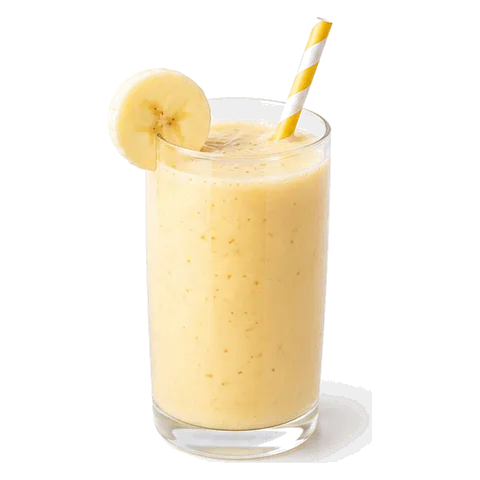
Peak eating banana. Sweet, but it still holds together in a blender or a jar.
Stage 5 of 7
First freckles
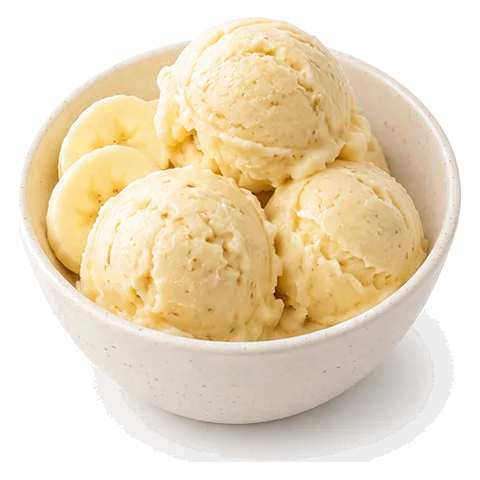
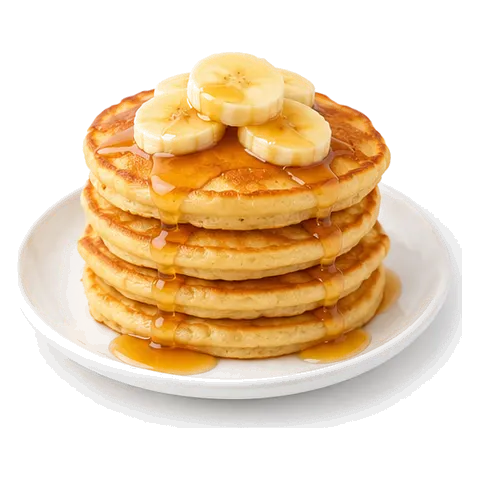
Sweeter and softer by the hour. Freeze it now for nice cream, or mash it into pancake batter.
Stage 6 of 7
Leopard
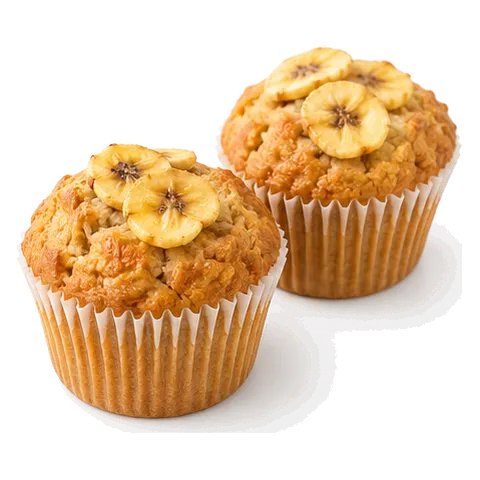
Covered in brown spots, deep flavour, mashes in seconds. This is where the baking starts.
Stage 7 of 7
Black
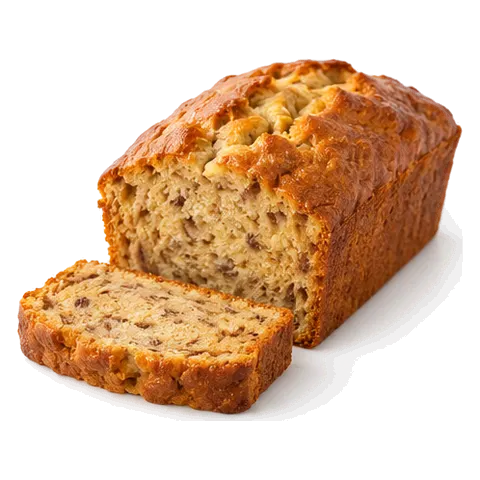
Do not throw it away. Skin almost black, inside soft and fragrant: the best banana bread you will ever make.
All recipes
Newest first. Every one of them has been made in our kitchen more than once, usually with bananas nobody else wanted.